

Arriving at Barcelona–El Prat Airport and wondering how to get into the city centre is one of the first decisions every visitor faces. The debate around the Barcelona airport taxi vs train question is more nuanced than it might first appear, because the right answer depends on your group size, luggage, budget, destination, time of day and how much stress you want to deal with after a long flight. Both options are legitimate, widely used and reasonably efficient — but they serve very different types of travellers. Understanding the key differences before you land will save you time, money and frustration at the arrivals hall.
Barcelona–El Prat Airport has two active passenger terminals: Terminal 1 (T1), which handles most major airlines including Vueling, Iberia and international carriers, and Terminal 2 (T2), which is used by Ryanair and a smaller selection of operators. The train — specifically the Rodalies R2 Nord line — only stops at T2, which means passengers arriving at T1 must first take a free shuttle bus to T2 before they can board. Taxis and private transfers, by contrast, pick up directly outside both terminals, which is a significant practical advantage for the majority of travellers who land at T1. This single fact already shapes much of the comparison between the two options.
This guide covers everything you need to make an informed decision: journey times, costs, luggage handling, accessibility, family travel, group dynamics, common mistakes and practical booking advice. Whether you are a solo budget traveller with a backpack or a family of five with suitcases and a pushchair, the information below will help you choose the option that genuinely suits your trip.
Understanding the Barcelona Airport Train: The R2 Nord Line
The Rodalies R2 Nord commuter train connects Terminal 2 of Barcelona–El Prat Airport with the city centre, stopping at Sants (the main intercity rail hub), Passeig de Gràcia (in the heart of the Eixample district) and El Clot-Aragó. The journey from the airport to Sants takes approximately 19 minutes, and to Passeig de Gràcia around 26 minutes. Trains run roughly every 30 minutes throughout the day, with services beginning early in the morning and finishing late at night, though the exact timetable should always be verified through Renfe or the official Rodalies website before travel.
The train ticket costs approximately €4.60 for a single journey when purchased with a T-Casual card, or slightly more as a standalone ticket — but again, fares can change and travellers should confirm current pricing before their trip. For a solo traveller with a single carry-on bag heading to a hotel near Passeig de Gràcia or Sants, the train is genuinely excellent value and a fast, predictable option. The carriages have luggage space, the stations are well signposted in multiple languages, and the overall experience is straightforward once you understand the T1-to-T2 shuttle step.
The T1 Shuttle Bus: What You Need to Know
If you arrive at Terminal 1, you cannot simply walk to the train station. You need to take the free airport shuttle bus that connects T1 and T2. This bus runs frequently, but the total transfer time — including waiting for the shuttle, riding it to T2, navigating to the train platform and waiting for the next train — can add 30 to 45 minutes to your overall journey. During busy periods, the shuttle can feel crowded, which is particularly uncomfortable with large suitcases or young children. This extra step is often the deciding factor for travellers who might otherwise choose the train.
How Barcelona Airport Taxis Work
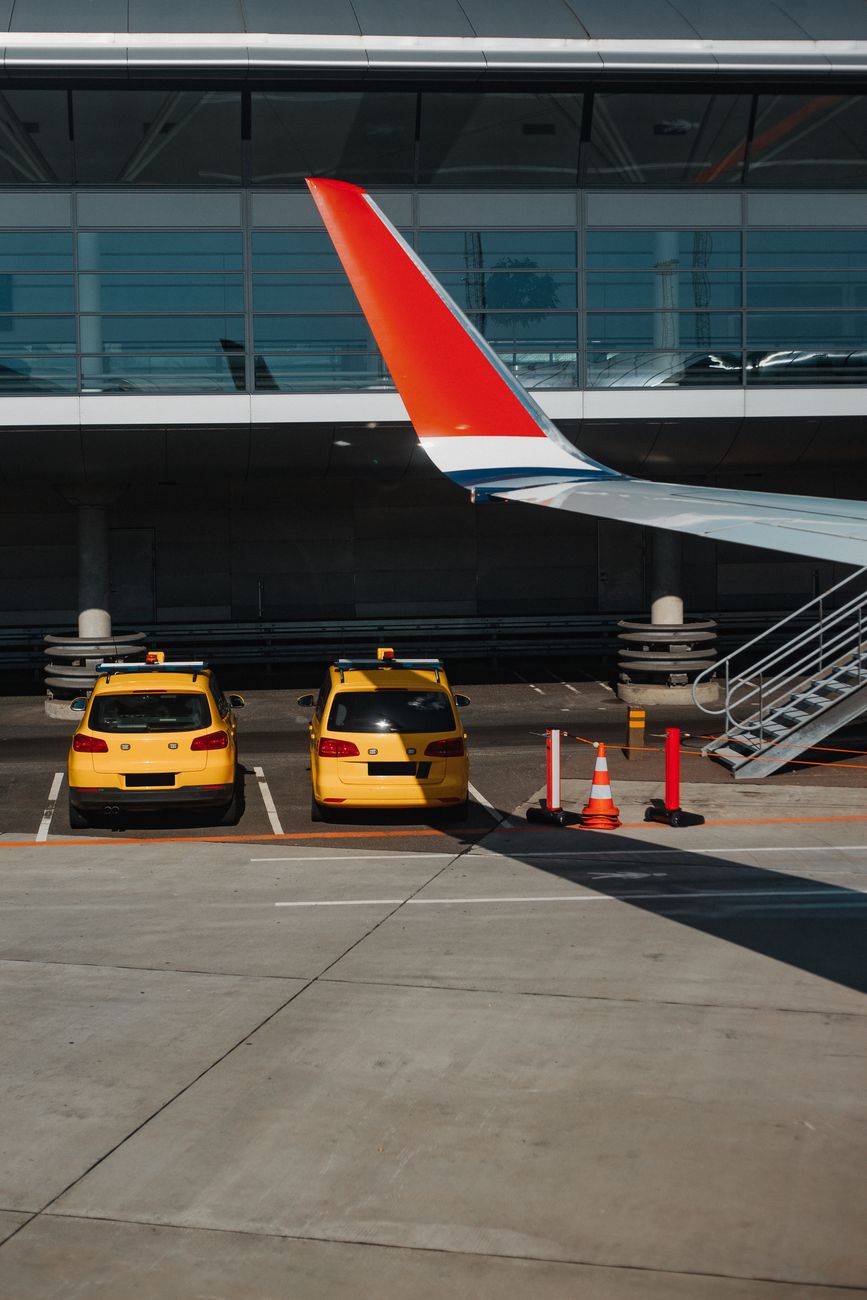
Official Barcelona airport taxis are black and yellow, metered and regulated by the city’s metropolitan transport authority. They are available 24 hours a day, seven days a week, directly outside the arrivals exits at both T1 and T2. There is no need to book in advance — you simply join the taxi queue, which is usually well organised and moves at a reasonable pace outside peak hours. The fare from the airport to central Barcelona is metered but subject to a minimum charge and airport supplement, meaning the total cost to the city centre typically falls in the approximate range of €30 to €45 depending on your exact destination and time of day. Fares are higher at night, on weekends and on public holidays.
One of the most practical advantages of a taxi is that it takes you directly to your hotel, apartment or meeting point without any intermediate steps, changes or luggage hauling up station stairs. For travellers arriving with multiple suitcases, elderly passengers, families with young children or anyone who simply wants to sit down and be driven to their front door, the taxi provides a level of convenience that the train cannot match. The driver will load your luggage, you tell them your destination, and that is the entire process.
Metered Taxis vs Fixed-Price Private Transfers
It is worth distinguishing between official metered taxis and pre-booked private airport transfers such as those offered by TransferBCN. A metered taxi fare is not fixed — it depends on traffic, route and time of day, which means your cost can vary significantly between journeys. A pre-booked private transfer, by contrast, comes with a confirmed price agreed before travel, which makes budgeting straightforward. TransferBCN also offers flight monitoring, so your driver adjusts to any delays without you needing to call or rebook, and vehicles are available with child seats, extra luggage space and accessibility options when requested in advance.
Comparing Costs: Barcelona Airport Taxi vs Train
| Factor | Train (R2 Nord) | Metered Taxi | Private Transfer (e.g. TransferBCN) |
|---|---|---|---|
| Approximate cost (1 person) | ~€4–5 | ~€30–45 | Fixed price, confirm on booking |
| Cost for a family of 4 | ~€16–20 | ~€30–45 (shared) | Fixed price per vehicle |
| Door-to-door service | No | Yes | Yes |
| Available at T1 directly | No (shuttle needed) | Yes | Yes |
| 24-hour availability | Limited timetable | Yes | Yes (pre-booked) |
| Luggage handling | Self-service | Driver assists | Driver assists |
| Fixed price guarantee | No | No | Yes |
| Flight monitoring | No | No | Yes |
The cost comparison shifts considerably when you factor in group size. A solo traveller saves meaningful money on the train. A couple travelling together already sees the per-person cost difference narrow. A family of four or five, once you account for the train tickets and the physical challenge of managing luggage across a shuttle bus and two train stops, will often find that a taxi or private transfer is comparable in total cost and vastly more comfortable.
Journey Time Comparison: Which Is Actually Faster?
In pure rail time, the train from T2 to Passeig de Gràcia takes around 26 minutes, which sounds impressively fast. However, the realistic door-to-door journey time for a T1 arrival includes: walking to the shuttle bus stop, waiting for and riding the shuttle to T2 (approximately 10 to 15 minutes), walking to the train platform, waiting for the next train (up to 30 minutes if you just missed one), riding the train and then walking or taking a taxi from the station to your final destination. In practice, total journey time from T1 arrival to a city centre hotel can easily reach 75 to 90 minutes by train.
A taxi from T1 to central Barcelona in moderate traffic typically takes 25 to 40 minutes. During rush hour — particularly on the C-32 and Gran Via approaches — this can extend to 50 or 60 minutes, but you are seated comfortably with your luggage rather than navigating public transport. For early morning arrivals, late night flights or any time when the train timetable is sparse, the taxi’s consistent availability makes it the more reliable choice for reaching your destination without unexpected waits.
Luggage, Families and Accessibility: Practical Realities
Travelling With Heavy or Oversized Luggage
The train is perfectly usable with standard suitcases, but it requires you to manage your bags entirely on your own. This means lifting them onto shuttle buses, carrying them along station corridors, holding them steady on moving trains and navigating escalators or lifts that are not always in service. If you are travelling with two large suitcases and a carry-on, this becomes genuinely tiring, especially after a long-haul flight. Taxis and private transfers eliminate this entirely — your driver loads and unloads your luggage, and you walk from the arrivals door to the vehicle with nothing more than your hand luggage.
Families With Young Children
Families travelling with pushchairs, car seats, baby bags and excited or tired children will almost always find the taxi or private transfer experience significantly more manageable than the train. TransferBCN, for example, allows passengers to request child seats in advance, ensuring that the vehicle is properly equipped when it arrives. The train has no provision for child seats, and the shuttle bus connection at T1 adds a layer of complexity that most parents with young children will prefer to avoid.
Passengers With Reduced Mobility
Both T1 and T2 have accessible facilities, and the train stations have lifts, though these are not always fully operational. For wheelchair users or passengers with mobility limitations, a pre-booked private transfer with an accessible vehicle is the most dependable option. Taxis can accommodate many passengers with reduced mobility, but it is worth confirming vehicle type in advance if specific accessibility features are needed.
When the Train Makes More Sense
The train is the right choice in specific, well-defined situations. If you are a solo traveller or travelling as a couple with light luggage, arriving at T2 (or willing to take the shuttle from T1), heading to a destination close to Sants or Passeig de Gràcia, and travelling during daytime hours when trains run frequently, the R2 Nord line is fast, affordable and efficient. Budget-conscious backpackers and business travellers with only a laptop bag will find it hard to beat on value.
The train also makes sense if you are comfortable navigating unfamiliar public transport systems, have no time-sensitive onward connections and are not travelling with anyone who requires extra assistance. For these travellers, the approximately €4–5 fare is genuinely excellent, and the journey itself is pleasant, passing through the city before stopping at two very central and well-connected stations.
Common Mistakes Travellers Make — and How to Avoid Them
One of the most frequent errors is assuming the train departs from T1. Many travellers walk out of T1 arrivals looking for a train station and are confused when they cannot find one. Always factor in the shuttle bus connection if you arrive at T1, and add the appropriate time to your journey plan.
Another common mistake is joining the taxi queue without checking whether a pre-booked transfer might be waiting for them in arrivals. If you have booked a private transfer, your driver will typically be waiting in the arrivals hall with a name board — look for this before joining any queue. Travellers who have not pre-booked and face a long taxi queue during peak hours sometimes wish they had arranged a transfer in advance, particularly after overnight flights when queues can be lengthy.
Forgetting to confirm train timetables is another issue. The R2 Nord does not run as frequently as a metro line — a 30-minute gap between trains can feel very long when you are tired and surrounded by luggage. Always check the Renfe or Rodalies timetable for your specific arrival time before committing to the train as your transport option.
Finally, some travellers underestimate the cost of a taxi for a group and assume it will be expensive. For three or four people sharing a single vehicle, the per-person cost of a taxi or private transfer is often comparable to individual train tickets, with the added benefit of door-to-door service and no luggage handling.
Group Travel: When a Private Transfer Becomes the Clear Winner
For groups of four or more, the economics and logistics of the Barcelona airport taxi vs train comparison shift decisively. A single taxi or private transfer vehicle accommodates the entire group, splits the cost between all passengers and delivers everyone to the same destination simultaneously. There is no risk of the group being separated on a crowded train or shuttle bus, no need to coordinate multiple train tickets and no debate about who carries which bag up the station stairs.
TransferBCN offers vehicles suited to different group sizes, from standard saloon cars for smaller parties to larger vehicles for groups with significant luggage or more passengers. Booking in advance means the vehicle is confirmed, the price is agreed and the driver is tracking your flight — so even if your arrival is delayed, the transfer adapts without any action required from you. For corporate groups, hen and stag parties, sports teams or extended families, this level of coordination is difficult to replicate with public transport.
Frequently Asked Questions About Barcelona Airport Transfers
Does the airport train go directly from Terminal 1?
No. The Rodalies R2 Nord train only stops at Terminal 2. If you arrive at Terminal 1, you must first take the free shuttle bus to T2 before boarding the train. The shuttle runs frequently but adds approximately 10 to 20 minutes to your journey, plus any waiting time for the next train departure. Always factor this into your total travel time when planning your arrival in Barcelona.
How much does a taxi from Barcelona airport to the city centre cost?
The approximate fare for a metered taxi from Barcelona–El Prat Airport to the city centre ranges from around €30 to €45, depending on your exact destination, traffic conditions and the time of day. Fares are higher at night, on weekends and on public holidays due to applicable supplements. These figures are approximate and subject to change — always check current rates or opt for a fixed-price private transfer to avoid surprises.
Is the airport train safe and reliable?
Yes. The Rodalies R2 Nord is a regulated commuter rail service that is generally safe, well maintained and widely used by both locals and tourists. As with any public transport, it is sensible to keep your belongings close, particularly in busy carriages. The main reliability consideration is the train frequency — services run roughly every 30 minutes, so a missed train means a significant wait.
Can I take a taxi or private transfer if I have a lot of luggage?
Absolutely. Taxis and private transfers are the most practical option for passengers with large or multiple suitcases. The driver will assist with loading and unloading, and there is no need to navigate stairs, escalators or crowded shuttle buses with heavy bags. If you have oversized luggage such as golf bags, ski equipment or a pushchair, it is worth confirming vehicle capacity when booking a private transfer.
Are child seats available for airport transfers?
Metered taxis in Barcelona are not required to carry child seats, and availability varies. If you are travelling with young children who require a car seat, the safest approach is to pre-book a private transfer and request the appropriate child seat at the time of booking. TransferBCN offers child seat options when arranged in advance, ensuring your family travels safely from the moment you land.
What happens if my flight is delayed? Will my taxi or transfer still be there?
If you have joined the taxi queue on arrival, delays simply mean you arrive later — the queue will still be there. For pre-booked private transfers, reputable companies including TransferBCN monitor incoming flights and adjust the driver’s schedule automatically. This means your driver will be waiting for you regardless of whether your flight lands early or late, without any need for you to make calls or send messages from the arrivals hall.
Is the train or taxi better for a late-night arrival?
For late-night arrivals, the taxi or private transfer is generally the more reliable choice. The R2 Nord train timetable becomes less frequent in the late evening and stops running entirely in the early hours of the morning. A pre-booked private transfer is available around the clock and provides a direct, comfortable journey to your accommodation regardless of what time your flight lands.
Conclusion: Making the Right Choice for Your Barcelona Arrival
The Barcelona airport taxi vs train decision ultimately comes down to your specific circumstances rather than one option being universally superior. The train is a smart, economical choice for solo travellers and couples with light luggage who arrive at or are willing to connect through T2, travel during daytime hours and are heading to destinations near Sants or Passeig de Gràcia. It is fast in rail time, inexpensive and straightforward once you understand the T1 shuttle step.
For families, groups, passengers with significant luggage, late-night arrivals and anyone who values a door-to-door experience with no intermediate steps, a taxi or pre-booked private transfer is the more practical and often more cost-effective solution when costs are shared. The convenience of being collected directly from arrivals, having your luggage handled and being driven to your exact destination without any connections is genuinely valuable after a long journey.
If you want complete peace of mind from the moment your flight lands, TransferBCN offers fixed-price private transfers from both T1 and T2 with flight monitoring, professional drivers, child seat options and vehicles suited to all group sizes. Book your Barcelona airport transfer in advance at TransferBCN and start your trip the way you mean to continue it — smoothly, comfortably and without unnecessary complications.