

Barcelona–El Prat Airport is one of the busiest aviation hubs in southern Europe, handling tens of millions of passengers every year across two main terminals. If you have a connecting flight or need to move between buildings for any reason, understanding how to travel from Barcelona airport Terminal 1 to Terminal 2 is essential. The two terminals are not connected by an internal walkway or an airside corridor, which surprises many first-time visitors. Getting this transfer wrong can mean missed flights, unnecessary stress, and wasted time — so knowing your options, timings, and logistics in advance makes an enormous difference to your journey.
The airport’s layout reflects decades of expansion. Terminal 1, known locally as T1, opened in 2009 and is the larger of the two. It serves most of the major international carriers, including Vueling, Iberia, British Airways, Lufthansa, and American Airlines. Terminal 2, referred to as T2, is the older facility and is divided into three sub-terminals: T2A, T2B, and T2C. Several low-cost carriers, including Ryanair and some charter operators, continue to use T2. This split between terminals is the main reason passengers find themselves needing to move between buildings — whether because their outbound and return flights are operated by different airlines, or because a connecting itinerary routes them through both facilities.
Planning your inter-terminal transfer well in advance is not just a good idea — it is often the difference between catching your connection and missing it entirely. The distance between the two terminals is approximately three kilometres, which sounds manageable but becomes significant when you factor in check-in queues, security screening, and the time needed to reach your departure gate. This guide covers every practical aspect of the Terminal 1 to Terminal 2 journey, including the free shuttle bus, approximate timings, luggage considerations, and advice for families, groups, and passengers with reduced mobility.
Understanding the Layout of Barcelona–El Prat Airport
Barcelona’s airport sits to the southwest of the city, near the town of El Prat de Llobregat. The entire complex is large, and the two terminal areas are separated by active taxiways and service roads, which is why no internal pedestrian connection exists between them. Terminal 1 is a single, modern, multi-storey building with a distinctive wave-shaped roof designed by architect Ricardo Bofill. It has four piers — A, B, C, and D — and handles the vast majority of long-haul and Schengen flights.
Terminal 2 is older and more spread out. The three sub-terminals (T2A, T2B, and T2C) are connected to each other by a covered walkway, so once you are inside the T2 complex, moving between sub-terminals on foot is straightforward. However, reaching T2 from T1 requires either the free inter-terminal shuttle bus or a private vehicle. There is no metro or train connection that links T1 and T2 directly — the RENFE Cercanías train line and the Aerobus both serve T2 and T1 separately, but they do not function as a quick inter-terminal shuttle.
The Free Inter-Terminal Shuttle Bus: Your Main Option
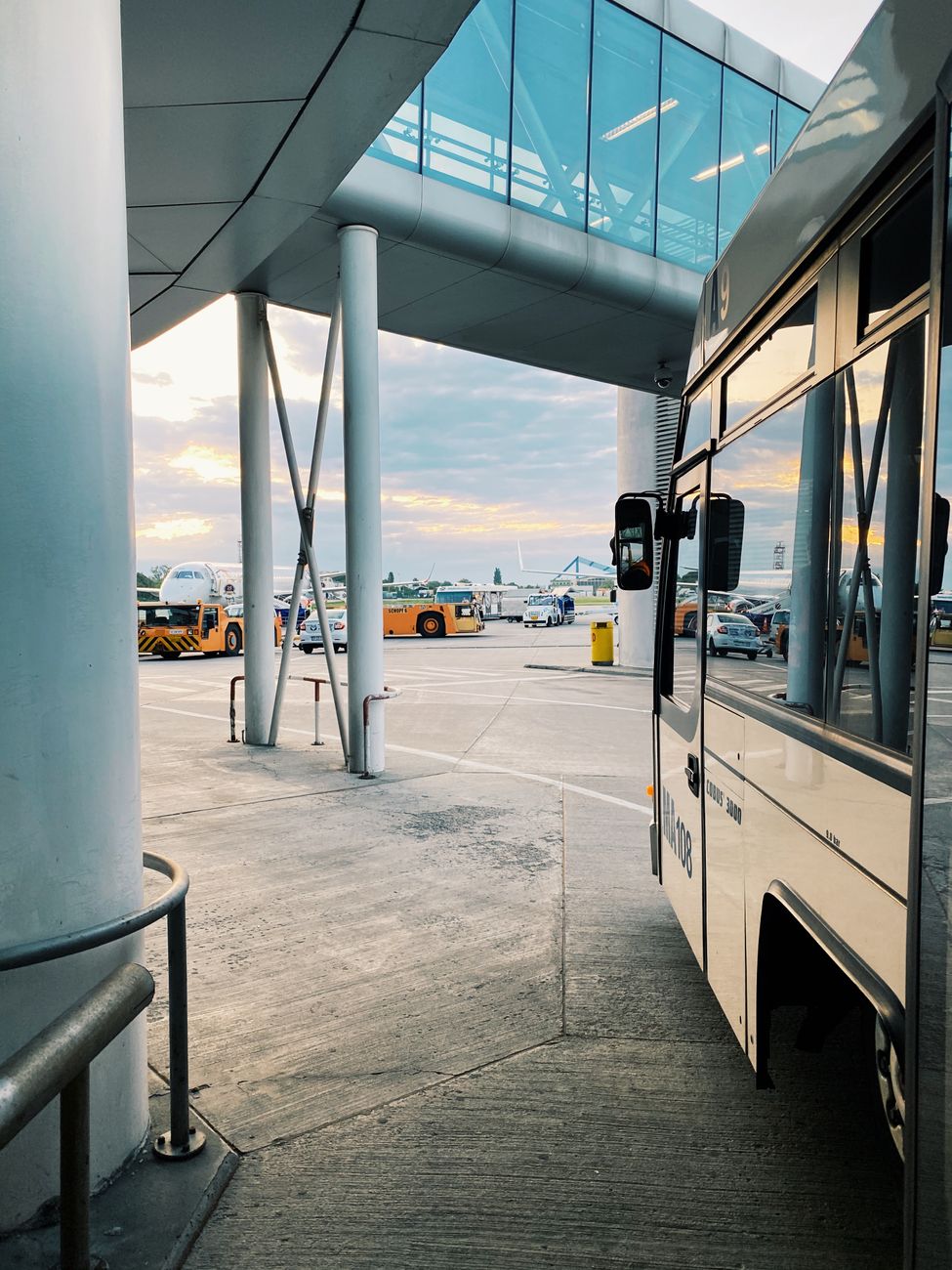
The most practical and widely used way to travel from Barcelona airport Terminal 1 to Terminal 2 is the free shuttle bus operated by AENA, the airport authority. This service runs continuously throughout the day and into the night, connecting the two terminals at regular intervals.
Where to Board the Shuttle
In Terminal 1, the shuttle bus stop is located on the ground floor, outside the arrivals area. Follow the signs marked “Bus Interterminales” or look for the dedicated bus lane near the exit doors. In Terminal 2, the shuttle stop is positioned between T2A and T2B, making it convenient for passengers heading to either sub-terminal. Signage throughout both buildings directs passengers clearly, though during busy periods it is worth allowing extra time to navigate from your arrival gate to the bus stop.
How Long Does the Shuttle Take?
The shuttle journey itself takes approximately eight to twelve minutes in normal conditions. However, the total time from leaving your gate in T1 to reaching your check-in desk or gate in T2 — or vice versa — is realistically between thirty and forty-five minutes when you include walking time at both ends, waiting for the next bus, and any queues. During peak hours in summer, the wait for the shuttle can extend to fifteen minutes or more. If you have a connecting flight, airlines and airport authorities generally recommend allowing a minimum of ninety minutes between flights that involve an inter-terminal transfer at Barcelona.
Does the Shuttle Run at Night?
The inter-terminal shuttle operates on a reduced but continuous schedule during overnight hours. If you have an early morning departure or a late-night arrival that requires a terminal change, the bus will still be available, though frequencies may be lower. It is always advisable to check the current schedule on the AENA website before your travel date, as service patterns can change seasonally.
Travelling Between Terminals by Taxi or Private Transfer
While the free shuttle is the standard option for most passengers, there are situations where a taxi or pre-booked private transfer makes more sense. If you are travelling with a large group, have significant amounts of luggage, are travelling with young children, or have a tight connection, paying for a direct vehicle transfer between terminals can save considerable time and reduce physical strain.
Licensed taxis are available at the taxi ranks outside both terminals. The fare for a short inter-terminal journey is typically metered and relatively modest, though it will vary depending on time of day and any applicable supplements. For passengers who have pre-booked a private airport transfer service such as TransferBCN, it is worth noting that your driver can assist with luggage handling and navigate directly between the two terminals without the uncertainty of waiting for a shuttle. This is particularly useful for business travellers, elderly passengers, and families with pushchairs or car seats.
Connecting Flights and Minimum Connection Times
One of the most common reasons passengers need to move between terminals is a connecting itinerary. Barcelona is increasingly used as a hub for connections between European cities and long-haul destinations, particularly on Iberia and Vueling routes. If your booking confirmation shows flights departing from different terminals, you must factor the inter-terminal transfer into your connection time.
What Is a Reasonable Minimum Connection Time?
Most airlines operating through Barcelona recommend a minimum connection time of ninety minutes for itineraries that involve a terminal change. Some booking platforms apply a minimum of two hours for these connections. If your layover is shorter than ninety minutes and involves a terminal switch, you should contact your airline immediately to discuss your options. In cases where both flights are on the same booking reference, the airline bears responsibility for rebooking if the connection is missed due to a delay — but if the flights are on separate tickets, you carry the risk entirely.
Schengen vs. Non-Schengen Connections
The type of connection also affects your timing. If you are arriving from a non-Schengen country and connecting to a Schengen flight, you will need to pass through passport control and potentially customs before accessing the departure area. This adds significant time to any inter-terminal transfer. Passengers arriving from within the Schengen Area generally have a smoother path, but security screening is still required before boarding any subsequent flight.
Luggage Considerations When Changing Terminals
Carrying heavy or bulky luggage between terminals adds complexity to what might otherwise be a simple transfer. If you have checked luggage and a connecting flight on a single booking, your bags will normally be transferred automatically by the airline — you should not need to collect and re-check them yourself. However, if your flights are on separate tickets, you will need to collect your bags at the T1 baggage carousel, carry them to the shuttle bus or taxi, and re-check them at T2.
This process takes time and physical effort. Trolleys are available throughout both terminals and can be used on the shuttle bus in most cases, though space is limited during busy periods. Passengers with oversized items such as bicycles, surfboards, or large musical instruments should allow additional time and consider whether a private vehicle transfer is more practical than the shuttle.
Advice for Families, Groups, and Passengers with Reduced Mobility
Travelling with children adds another layer of planning to any airport transfer. The shuttle bus can accommodate pushchairs and prams, but boarding and alighting requires some manoeuvring, particularly when the bus is crowded. If you are travelling with a baby or toddler, a private vehicle with a pre-installed child seat — as offered by services like TransferBCN — removes the uncertainty of navigating a busy shuttle with young children and luggage simultaneously.
For groups of six or more passengers, the shuttle bus can feel impractical, especially if the group has significant luggage. A pre-booked minivan or group transfer vehicle offers a more comfortable and efficient solution, with the added benefit of door-to-door service between terminals. Passengers with reduced mobility should be aware that AENA provides dedicated assistance services at both terminals, including wheelchair support and priority boarding for the inter-terminal shuttle. It is strongly recommended to request this assistance in advance through your airline or via the AENA accessibility service.
Common Mistakes Passengers Make When Transferring Between Terminals
Understanding the most frequent errors helps you avoid them entirely. The number one mistake is underestimating the time required. Many passengers see the three-kilometre distance on a map and assume a ten-minute walk will suffice — but the terminals are not connected on foot, and the shuttle adds waiting time that cannot be predicted precisely.
A second common error is failing to check which terminal your flight departs from before arriving at the airport. Both T1 and T2 have check-in areas, security checkpoints, and departure gates, and it is surprisingly easy to arrive at the wrong building if you have not confirmed your terminal in advance. Always check your boarding pass or airline app the morning of travel. A third mistake is assuming that checked luggage will automatically transfer between terminals on separate-ticket bookings — it will not, and the time required to collect, transport, and re-check bags is substantial. Finally, passengers sometimes miss the shuttle stop because they exit the terminal through the wrong doors. In T1, the inter-terminal bus is on the ground floor landside level — not at the departures level above.
Practical Tips for a Smooth Terminal Transfer
A few straightforward habits make the inter-terminal transfer significantly less stressful. First, confirm your departure terminal when you receive your boarding pass — this information is printed clearly and also available in your airline’s app. Second, if you are making a connection, speak to airline staff at your arrival gate to ask about the fastest route to the shuttle stop. Third, travel light where possible — a carry-on bag is far easier to manage on the shuttle than multiple checked pieces.
If you are arriving into Barcelona from an international destination and continuing to a domestic or European flight from a different terminal, plan to spend at least two hours on the ground. Use any spare time to eat, hydrate, and confirm your onward gate rather than rushing. Barcelona airport has good food and retail options in both terminals, so a slightly longer connection is not wasted time.
Frequently Asked Questions About Barcelona Airport Terminal Transfers
Is the inter-terminal shuttle bus at Barcelona Airport really free?
Yes, the shuttle bus connecting Terminal 1 and Terminal 2 at Barcelona–El Prat Airport is completely free of charge for all passengers. It is operated by AENA and does not require a ticket or boarding pass to board. The service is available to anyone who needs to move between the two terminals, including meeters and greeters, though the primary purpose is to serve connecting passengers and airport workers.
How often does the inter-terminal shuttle run?
During peak daytime hours, the shuttle typically runs every ten to fifteen minutes. During quieter periods and overnight, the frequency reduces but the service remains operational. Exact schedules can change seasonally, so it is worth checking the current timetable on the official AENA website before your travel date, particularly if you have an early morning or late-night connection.
Can I walk between Terminal 1 and Terminal 2?
No. There is no pedestrian route between Terminal 1 and Terminal 2 at Barcelona airport. The terminals are separated by active taxiways and service infrastructure, making walking between them impossible and unsafe. The only landside options are the free shuttle bus, a taxi, or a pre-booked private transfer vehicle.
What happens to my checked luggage when I transfer between terminals?
If both flights are on the same booking reference and operated by partner airlines, your luggage should be transferred automatically and you will not need to collect it between flights. If your flights are on separate tickets, you must collect your bags at the baggage carousel, transport them to the other terminal yourself, and re-check them at the new airline’s desk. Always confirm the luggage transfer policy with your airline before travel.
How much time should I allow for a terminal transfer at Barcelona airport?
Most airlines and travel advisors recommend a minimum of ninety minutes for connections that involve moving between Terminal 1 and Terminal 2. If your connection involves a non-Schengen arrival, passport control, customs, and re-checking luggage, two hours is a safer allowance. Tight connections of under an hour between terminals carry a significant risk of being missed.
Are there taxis available between the terminals at all hours?
Licensed taxis operate at both terminals around the clock. The taxi rank at Terminal 1 is located on the ground floor outside arrivals, and T2 has its own rank in a similar position. Fares are metered and subject to airport supplements. For passengers who prefer a fixed-price option with guaranteed availability, a pre-booked private transfer is a reliable alternative, particularly for early morning or late-night travel.
Is there assistance available for passengers with reduced mobility during the terminal transfer?
Yes. AENA provides dedicated accessibility assistance at both terminals, including wheelchair services and priority access to the inter-terminal shuttle. Passengers who require this support should request it in advance through their airline or directly via the AENA assistance service. Private transfer companies such as TransferBCN can also provide accessible vehicles and personalised assistance for passengers with mobility requirements.
Does the RENFE train or Aerobus connect the two terminals?
The RENFE Cercanías train and the Aerobus both stop at Terminal 2 and Terminal 1, but they are not designed or practical for inter-terminal transfers. The train route between the two terminal stops involves travelling out of the airport campus and back, making it significantly slower than the dedicated shuttle. For moving between terminals, the free inter-terminal shuttle bus remains the fastest and most direct option.
Conclusion: Plan Ahead and Travel Confidently Between Barcelona Airport Terminals
Moving from Barcelona airport Terminal 1 to Terminal 2 — or in the opposite direction — is a manageable task when you know what to expect. The free AENA shuttle bus is reliable, clearly signposted, and serves the vast majority of passengers well. The key is to build sufficient time into your itinerary, confirm your departure terminal before you arrive at the airport, and understand how your luggage will be handled if your flights are on separate bookings.
For passengers who prefer a more comfortable, predictable, and personalised experience — particularly families with young children, groups with significant luggage, business travellers on tight schedules, or anyone with mobility needs — a pre-booked private transfer between terminals removes the uncertainty entirely. TransferBCN offers fixed-price private transfers at Barcelona airport with professional drivers, flight monitoring, child seat options, and full luggage assistance. Whether you need a vehicle waiting at arrivals or a direct transfer between terminals as part of a wider Barcelona journey, booking in advance ensures you have one less thing to worry about on travel day. Visit TransferBCN to check availability and get a quote for your next trip through Barcelona–El Prat Airport.