

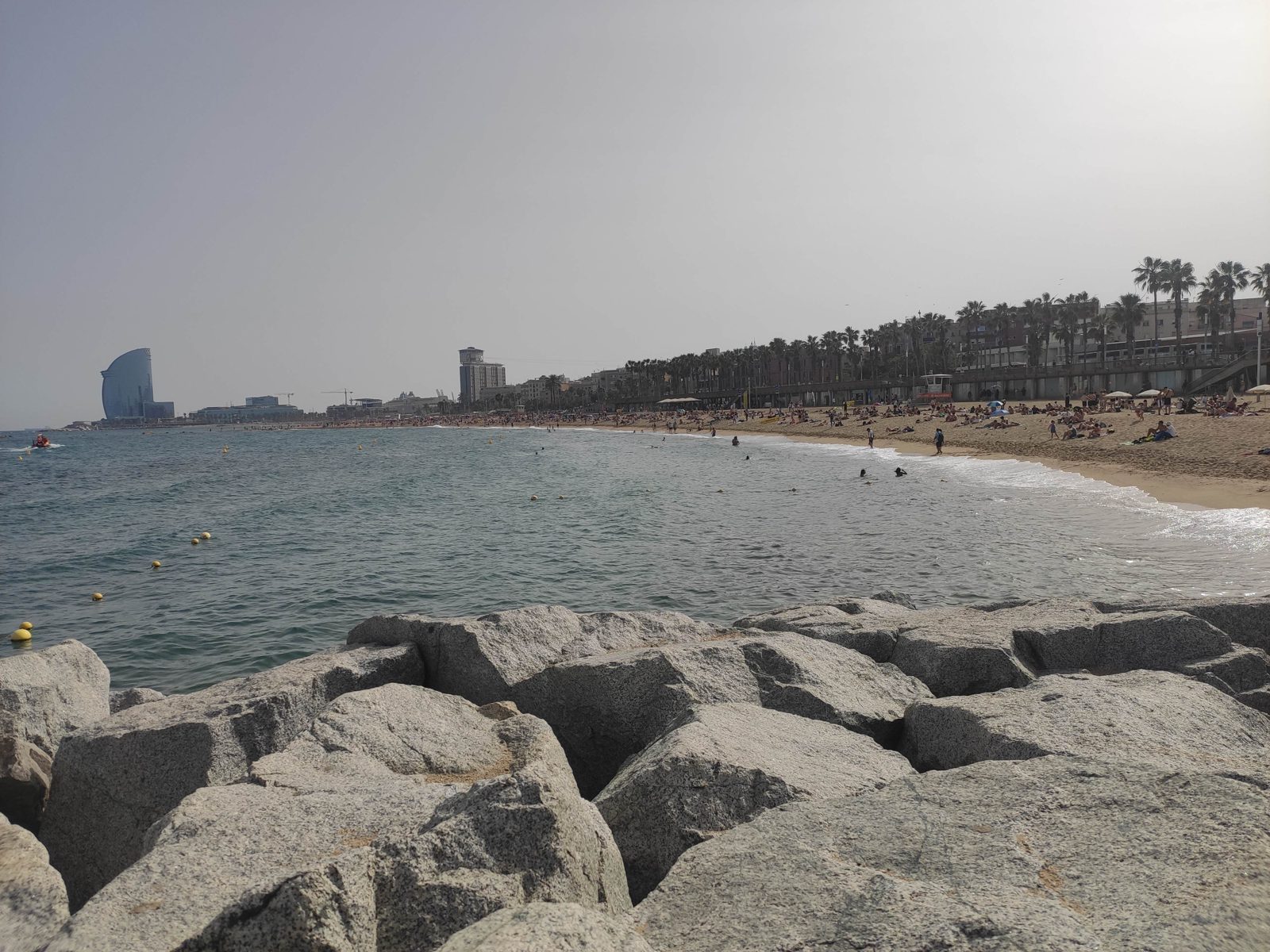
Quick answer: Barcelona has excellent beaches within an hour of the city. The city’s own Barceloneta beach is 15-20 minutes by metro. For sand without the crowds, Castelldefels (22km, 15 min by train) has one of the region’s longest beaches. Further out, Sitges (35 min), Calella (1h10), Lloret de Mar and Tossa de Mar (1-1.5h) each have a distinct character — lively, quiet, medieval, or family-friendly. This guide sorts every beach by real travel time so you can pick based on how far you actually want to go.
In the City: Barceloneta
Barceloneta is Barcelona’s own beach, a 15-20 minute metro ride (L4 to Barceloneta or Ciutadella-Vila Olímpica) from the city center — no train ticket, no day trip planning, just a metro fare. It’s also the busiest and least peaceful option on this list, especially in summer, with a lively promenade of chiringuitos (beach bars) rather than a quiet stretch of sand.
Closest Real Escape: Castelldefels
Castelldefels sits about 22km south of Barcelona and has one of the region’s longest beaches — roughly 5km of sand, wide enough that it doesn’t feel packed even when busy. It’s reachable by Rodalies train from Barcelona-Sants in around 15-20 minutes, making it the easiest genuine escape from the city beach without committing to a full day trip.
Under an Hour: Sitges
Sitges is about 35 minutes from Barcelona by train and has 17 named beaches along its coastline, plus a walkable old town with a genuinely different atmosphere from Barceloneta — more upscale, more LGBTQ+-friendly nightlife, less crowded midweek. See our full Sitges guide for train times and what to do beyond the beach.
The Costa Brava Towns: Blanes, Lloret de Mar, and Tossa de Mar
These three sit roughly 1-1.5 hours from Barcelona and each has a different personality. Blanes is the practical gateway to the Costa Brava with a working port. Lloret de Mar is the liveliest, with the most built-up resort infrastructure. Tossa de Mar is the most scenic, with a medieval walled old town rising above the beach. Full guides: Blanes, Lloret de Mar, Tossa de Mar.
The Maresme Coast: Calella
Calella, about 49km up the coast on the Maresme (not to be confused with Calella de Palafrugell, a separate village further north on the Costa Brava), is a straightforward beach-holiday town with a long promenade and frequent direct trains — see our Barcelona to Calella guide for the full breakdown.
Comparing All the Options
| Beach / Town | Distance | Travel time | Character |
|---|---|---|---|
| Barceloneta | In-city | 15-20 min (metro) | Lively, urban, busiest |
| Castelldefels | ~22 km | 15-20 min (train) | Long, wide, quiet stretches |
| Sitges | ~35 km | ~35 min (train) | Upscale, walkable old town |
| Calella | ~49 km | ~1h10 (train) | Straightforward beach-holiday town |
| Blanes | ~65 km | ~1 hour (train) | Costa Brava gateway, working port |
| Lloret de Mar | ~75 km | 1-1.5 hours | Liveliest resort infrastructure |
| Tossa de Mar | ~80 km | ~1.5 hours | Medieval walled old town |
FAQ
Barceloneta, the city's own beach, is a 15-20 minute metro ride from the center. For a quieter escape still close by, Castelldefels is about 15-20 minutes by train and has one of the region's longest beaches.
Castelldefels and Calella are both straightforward, family-friendly options with long sandy beaches and easy train access. Sitges and the Costa Brava towns work well too, though they lean more toward couples and groups.
Castelldefels is the quietest easy option thanks to its length — 5km of sand spreads crowds out. Further afield, Tossa de Mar and Blanes are calmer than Lloret de Mar, which has the most built-up resort scene.
Yes — every beach on this list is doable as a day trip. Castelldefels and Sitges are easy half-days; Calella, Blanes, Lloret de Mar, and Tossa de Mar are full-day trips given the longer travel time each way.